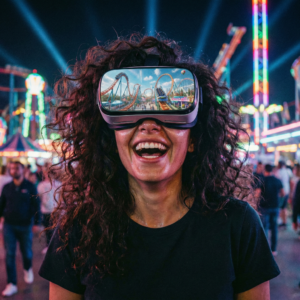
Virtual Reality or VR Virtual Reality (VR) is not merely a technological advancement. It represents a profound leap toward the future of human experiences and has a significant impact on daily life. VR is a transformative tool with the potential to revolutionize industries, enrich personal lives, and redefine how we perceive and interact with the world. In the following article, we delve into the essence of virtual reality—its origins, evolution, and the countless ways it can enhance productivity, boost personal well-being, and foster job satisfaction—making this knowledge accessible to technology enthusiasts.
Understanding Virtual Reality | What is VR?

At its core, Virtual Reality relies on a computer-generated environment that simulates physical presence in a real or imagined space. Using specialized hardware—such as VR headsets and controllers—users are transported into an immersive digital world where they can interact with objects, manipulate environments, and engage in activities as if they were physically present. This sense of presence is achieved through high-precision visual imagery, multidimensional sound, and responsive (interactive) haptic feedback, creating a convincing illusion of reality. However, if we are precise, calling it an “illusion” doesn’t fully capture it. Unlike its name might suggest, Virtual Reality is entirely real in its effects and is poised to become a significant part of human life.
The concept of VR dates back to the mid-20th century, with early experiments in multidimensional and immersive technologies paving the way for its development. Over the decades, advancements in computational power, computer systems, graphic rendering, and sensor technology have transformed VR from a niche concept into a mainstream tool with applications spanning entertainment, education, healthcare, engineering, and beyond.
Why Virtual Reality Was Created

The creation of Virtual Reality arises from the convergence of technological innovation and human curiosity. From its inception, VR was envisioned as a tool to transcend the limits of physical reality—to explore, create, learn, and connect in ways previously unimaginable. The driving forces behind VR development can be categorized into several key motivations:
- Exploration and Innovation: VR enables individuals to discover new environments and experiences that might be inaccessible or impractical in the physical world. Whether climbing towering mountains, diving into the depths of the ocean, or journeying through fantastical realms, VR allows users to satisfy their innate curiosity and push the boundaries of exploration.
- Advanced Training: In educational and professional settings, VR serves as a powerful tool for immersive learning and training. By simulating real-world scenarios and providing hands-on experience in a safe and controlled environment, VR accelerates learning outcomes and enhances knowledge retention. From medical simulations, driving simulators, and flight training to complex engineering tasks and cultural heritage preservation, VR effectively bridges the gap between theory and practice with unparalleled efficiency.
- Entertainment and Interaction: In the realm of entertainment, VR is transforming how we consume media and interact with digital content. From fully immersive gaming experiences that blur the lines between reality and imagination to virtual concerts, museums, and social gatherings, VR introduces a new dimension of interaction and enjoyment. It turns passive consumption into active participation, allowing users to shape their own experiences and narratives within digital spaces. VR has also pushed the boundaries of play and amusement, with Simoto making significant strides through creativity and innovation in transforming the entertainment and amusement park industry.
- Empathy and Empowerment: VR possesses a unique ability to place users in the shoes of others, fostering empathy and understanding. Through immersive simulations and storytelling, VR can evoke emotional responses and prompt reflection on social issues, cultural diversity, and environmental challenges. This capacity for empathy extends beyond entertainment into therapeutic applications, where VR-based interventions—through controlled exposure and desensitization—aid in the treatment of phobias, PTSD, and anxiety disorders. One example is the height-fear simulator (elevator simulator) designed by Simoto, which uses VR combined with play and entertainment to help users overcome fear of heights. This simulator has been made available to both large and small amusement parks.
The Most Important Applications of Virtual Reality
Boosting Productivity
In the realm of productivity, VR is poised to redefine workflows and collaboration across industries. By creating virtual workspaces that transcend geographical barriers, VR enables teams to collaborate in real time, visualize complex data, and present designs with unparalleled clarity. Architects can walk through virtual buildings before construction begins, designers can prototype products in 3D environments, and engineers can simulate operations in hazardous conditions. All VR applications are designed with the goal of optimizing efficiency and reducing costs.
Additionally, VR enhances training programs by providing hands-on experience in high-risk scenarios without compromising safety. From emergency response drills and military simulations to professional skill development, VR immerses trainees in realistic environments where they can practice decision-making, refine techniques, and build muscle memory—one of the most important applications of VR in sports. This experiential learning approach not only accelerates skill acquisition but also prepares individuals for challenges they may encounter in their careers.

Fostering Personal Well-Being
In a world that is increasingly interconnected and fast-paced, maintaining personal well-being is essential for a fulfilling life. VR provides a gateway to relaxation, focus, and stress relief through immersive experiences that enhance mental and emotional health. Virtual environments designed for meditation, yoga, and guided relaxation transport users to serene landscapes where they can recharge, cultivate inner calm, and nurture a sense of tranquility.
Furthermore, VR-based therapies offer innovative solutions for treating mental health disorders such as anxiety, depression, and PTSD. Virtual reality therapists provide controlled exposure to stimuli and deliver interventions within interactive environments, enabling individuals to confront and manage their symptoms in a supportive, guided manner. This personalized approach to treatment not only improves therapeutic outcomes but also empowers individuals to take control of their own mental health journey.
Fostering Job Satisfaction
Beyond its immediate applications in productivity and well-being, VR has the potential to transform career paths and create new opportunities across industries. For creative professionals, VR tools enable the creation and manipulation of digital assets in 3D space, fostering innovation and pushing artistic boundaries. Architects can collaboratively visualize and refine designs with clients and stakeholders, while fashion designers can prototype clothing and accessories in virtual studios before bringing them to life.
Entrepreneurs and marketers use VR to showcase products and engage customers in immersive brand experiences that strengthen loyalty and drive sales. Virtual exhibitions, interactive product demonstrations, and virtual tours provide consumers with engaging and memorable ways to experience products and services, bridging the gap between digital marketing campaigns and real-world purchasing decisions.
Professionals in fields such as healthcare, education, and engineering leverage the power of Virtual Reality to innovate and improve outcomes for their clients and patients. Surgeons perform complex procedures in virtual operating rooms, educators transport students to historical events and distant destinations, and engineers collaborate on designs and simulations that push existing boundaries. The sense of empowerment and achievement gained from using VR technology not only enhances job satisfaction but also stimulates a passion for continuous learning and professional growth.
Embracing the Future of Virtual Reality

The future of Virtual Reality promises limitless potential. Advances in hardware, software, and content creation tools continue to expand its applications across industries, deepening its impact on our lives. From developments in artificial intelligence and machine learning to innovations in haptic feedback and sensory interactions, VR is poised to become an increasingly integral part of our daily experiences.
In conclusion, Virtual Reality demonstrates a transformative force that transcends the boundaries of physical reality, opening new realms of creativity, productivity, and personal fulfillment. By harnessing its immersive capabilities and leveraging its transformative potential, we embark on a journey of exploration and innovation that promises to redefine our understanding of what is possible. As VR continues to evolve and integrate into our lives, we must embrace the opportunities it offers to shape a future where imagination knows no limits and the line between virtual reality and reality becomes delightfully blurred.